
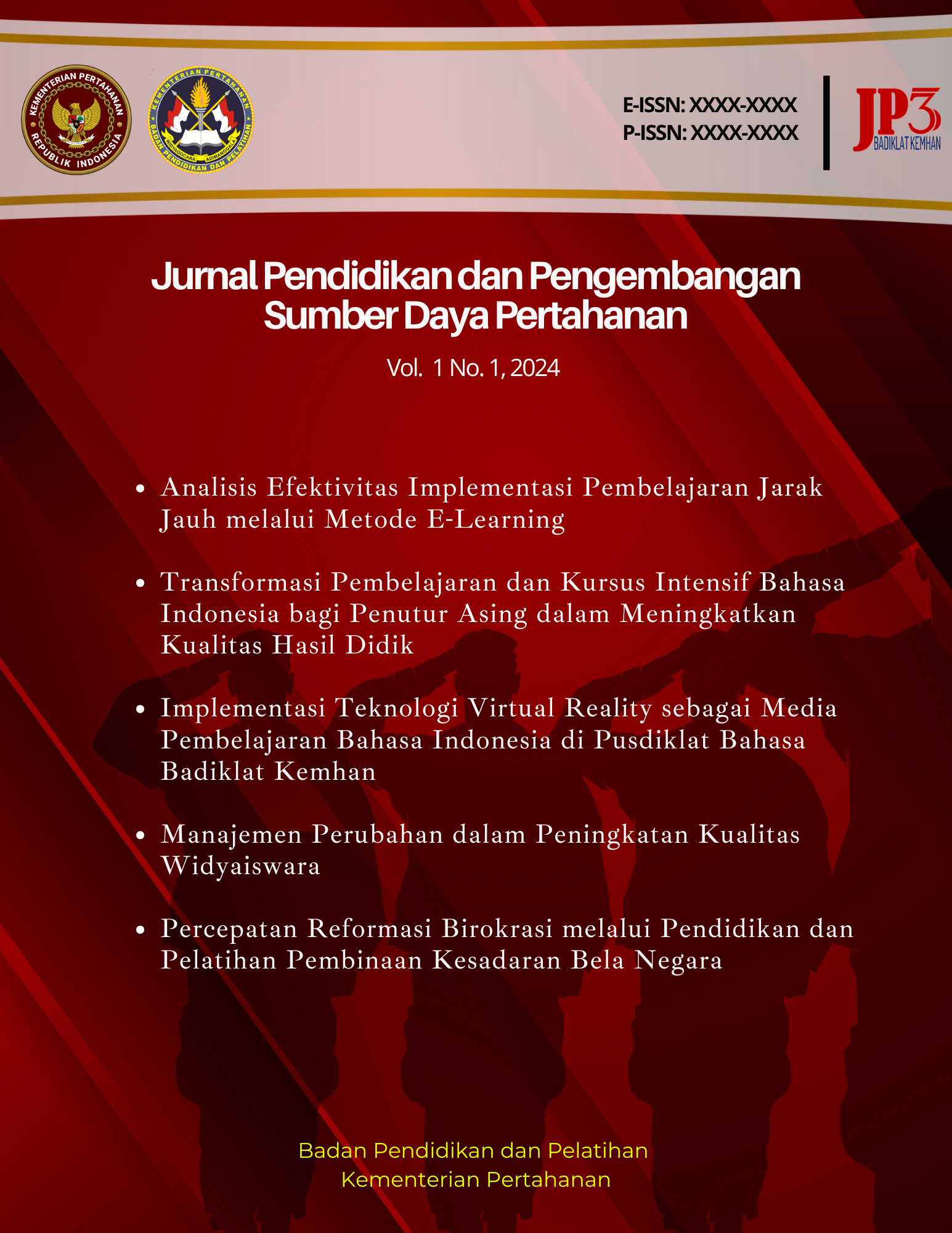
Transformation of Learning and Intensive Indonesian Language Courses for Foreign Speakers in Improving The Quality of Educational Outcomes
DOI:
https://doi.org/10.63210/jp3.v1i1.9Keywords:
Learning transformation, Indonesian language, quality of student resultsAbstract
This transformation aims to produce learning programs that are more adaptive, responsive to the needs of international students, and able to create a comprehensive and in-depth learning experience. With this transformation, it is hoped that foreign speakers will not only learn Indonesian technically, but will also be able to understand and interact with Indonesian culture more broadly. There are many methods and strategies that each teacher can use to make BIPA learning or transformation more effective, both in the process of improving oral and written language skills as well as insight into Indonesian culture. This is the background for the author to conduct research. This is a response and the result of positive values from the various ways language activists and institutions introduce Indonesian to the world. The research method uses a descriptive qualitative approach and literature study. In line with these steps, the Indonesian language learning process organized by the Language Education and Training Center through the Intensive Indonesian Language Course (KIBINA), which is a language transformation process, needs to be explored through comprehensive research, especially efforts to internationalize the Indonesian language in improving the quality of international students' educational outcomes. from time to time. Based on the comparison of the middle and final exam scores, the results can be seen that of the 5 materials that were transformed or taught, 3 of them experienced a decline, such as Listening, Speaking and Grammar skills. The most drastic decline was in listening skills, while the materials that experienced an increase were reading and writing, although the increase was not significant. Based on the findings of researchers in the field, the transformation of knowledge through the Kibina or BIPA program for transformation in the classroom includes 4 (four) skills taught to students, especially foreign students, namely; listening, reading, writing and speaking as well as grammar are required to improve and combine knowledge, affective and psychomotor aspects.
References
Badan Pengembangan dan Pembinaan Bahasa Kementerian Pendidikan dan Kebudayaan RI. Buku Praktis Bahasa Indonesia.Jilid 2. Edisi pertama cetakan ketujuh.
Bambang Nurrochim. Bela Negara melalui Misi Diplomasi Kebahasaan.Penerbit. UNJ Press. Cetakan pertama, 2022. ISBN: 978-623-7518-86-0.
Departemen Pertahanan Republik Indonesia. Badan Pendidikan dan Pelatihan Departemen Pertahanan Dalam Pengabdiannya. Penerbit; Badiklat Kemhan.Jakarta,Januari 2004.ISBN 979-3624-05-1. Hal.90-91.
Hilda Septiana.Journal Bahasa Indonesia bagi Penutur Asing (JBIPA) ISSN 2685-5135) Print. ISSN 2685-8053 Elektronik. Pemanfatan Media Digital G Suit for Educational dalam pembelajaran BIPA jarak jauh di University of Vienna. Diakses pada Selasa, 21 Maret 2023. Pukul 15.30 wib.
Liliana Muliastuti. Bahasa Indonesia bagi Penutur Asing. Acuan Teori dan Pendekatan Pengajaran.Yayasan Pustaka Obor Indonesia.Jakarta,2019.
Octo Dendy Andriyanto, Bambang Yulianto, Oktober 2021. Journal Pendidikan Bahasa dan Sastra Indonesia Metalingua. 6 (2) 59-66. DOI: 10.211-07/metalingual.v6i2.10604. Diakses pada Selasa, 21 Maret 2023. Pukul 17.30 wib.
Siti Ghaida Sri Afira Ruhyadi Universitas Islam Negeri Sunan Kalijaga Yogyakarta ghaidasiti@gmail.com. Diakses pada Selasa, 21 Maret 2023. Pukul 17.55 wib.
Sumber: https://mediaindonesia.com/humaniora/447472/kenali-4-macam-teori-belajar-yang-bisa-iterapkanSumber: https://mediaindonesia.com/humaniora/447472/kenali-4-macam-teori-belajar-yang-bisa-diterapkan. Diakses pada Selasa, 21 Maret 2023. Pukul 17.50 wib.
Undang Undang Dasar Negara Republik Indonesia 1945 Pasal 35.
UU RI Sistem Pendidikan Nasional tahun 2003
Downloads
Published
How to Cite
Issue
Section
License
Copyright (c) 2024 ministry of defense education and training agency

This work is licensed under a Creative Commons Attribution-NonCommercial-ShareAlike 4.0 International License.
All articles published in this journal are licensed under a Creative Commons Attribution 4.0 International License (CC BY 4.0) .
This license allows users to share (copy and redistribute the material in any medium or format) and adapt (remix, transform, and build upon the material) for any purpose, even commercially, provided that appropriate credit is given to the original author(s) and the source.
Copyright of all articles is held by Badan Pendidikan dan Pelatihan Kementerian Pertahanan Republik Indonesia.
For articles published prior to 2026, licensing and copyright information may differ as stated in the article files.




